All-Star

All-Star

Friday, May 25, 2012

The Symbol


People like to write about the way Superman changes over time. Maybe one day I'll have something more to say about that, but for now, let's just look at the way some people present the changes to the Superman shield. 

 
There's this one from Metropolisplus. 


This incorporates some of the live-action shields. Why only go to Curt Swan?


Got this one from this guy's journal


This one gives more attention to the early, triangle versions.


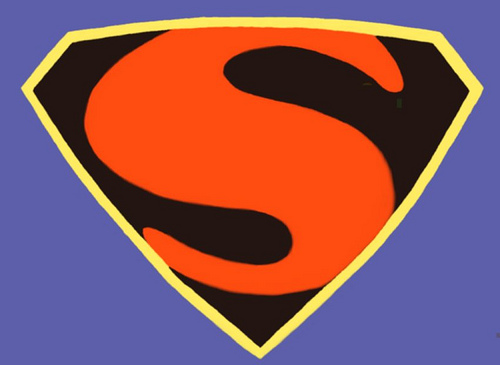
And, for the record, this one's my favorite version. The shield from the old Fleischer Studios animated short films. I don't know why it's my favorite. It just is.


Thursday, May 24, 2012

An appreciation of Stefano Caselli


Caselli is an Italian artist who has started drawing some issues of Amazing Spider-Man for Marvel. I first came across his work on Avengers: The Initiative. Followed him to Secret Warriors. I'm not exactly sure what it is about his work that appeals to me. There's a plasticity to the way he draws people, most notable in this ASM cover and Mr. Fantastic's face.

I think his work is best suited to horror, and that's probably why he sort of made his name working on Hack/Slash. He also did the series Defex, and did some G.I.Joe work, too. Probably other stuff I haven't been able to track down.


Like I said, his work would fit well with horror, and with that often comes fantastical monsters.


Or Volstagg the Vehement. Wait, you don't know Volstagg? He'd buddies with Fandral the Dashing and Hogun the Grim. No, I'm not kidding.

Vainglorious? Variegated? I can't come up with any good v-words.

His covers for Spider-man are pretty great.


Caselli's work can be cartoonish in that his characters' poses and expressions are exaggerated, but this fits the superhero genre he's been working in lately. And I think it works. His faces are expressive, and that's a very good thing. He's one of the few pencillers whose work I actively seek out.


Tank Girl

Wednesday, May 23, 2012

Darth Vader vs. the Wolf Man


My favorite movie ever.
Who’s stronger, Superman or the Hulk?  Comic fans once thrived on such questions, and to some extent, they remain popular.  I’m asking one that’s never been asked before…Who’s worse, Darth Vader, or the Wolf Man? 

First, let's be clear. I’m talking about The Wolf Man, not Werewolf by Night or Man-Wolf or the Werewolf of London or Teen Wolf or anybody else.  I’m talking about Lon Chaney, Jr., playing Lawrence Talbot in George Waggner’s 1941 movie (and, to a lesser extent, Benecio del Toro in Joe Dante’s 2010 movie The Wolfman), who despite being pure of heart and saying his prayers by night turns into a pig-nosed hairy fella when the full moon shines bright.  Second, I’m talking about Darth Vader.  Third, I’m not talking about a physical fight here.


That one would be interesting, sure.  What would happen to a monster who can only be killed by silver if Vader slashed his arm off with his light saber?  And would the Wolf Man’s speed and claws be enough to get by Vader’s reflexes and precognition?  Vader could stop laser blasts with his hands, after all. I never get tired of that scene in Empire where Han shoots at him in that Cloud City dining room.
Man, there's a lot of weird Star Wars stuff out there.

I’m more interested in how they lived and died.  They were both good people in many ways, separated from their families until reunited by tragedy and pain.  They both undergo a dark transformation and kill lots of people.  Then they’re defeated in battle by a family member: Larry by his father; Darth by his son. Their stories are about father-son relationships. (The 2010 Wolfman film has the son kill the father.)

Evidently we're uncomfortable with Oedipus reversed.
In Star Wars, the father-son tension and rivalry dominates the whole story. It’s already present in Episode IV in the scenes where Luke talks with his uncle and with Obi-Wan.  At the end of Jedi, Vader sees his son being killed by the Emperor, so he throws the Emperor down the shaft in the middle of the throne room.  The Emperor’s lightning bolts short circuit Vader’s life support and he dies soon after.  Then we see the ghost of Vader as Anakin, standing with Yoda and Obi-Wan, free of the death mask.  He is redeemed. The three prequel films go about showing us just what he was like when he was still a good guy; in other words, what makes him redeemable in the first place—how he was able to summon the will to save Luke.

In The Wolf Man, the father-son tension is all subtext.  Larry comes home to Wales after the death of his brother, presumably to assume the brother’s role in the family.  He and his father Sir John don’t argue much: it’s more like they don’t know how to relate to each other.  Then, Larry wolfs out, kills some people, feels bad about it but can’t stop it, and Sir John beats him to death with a silver cane.  The last shot of the film shows Sir John’s reaction to the revelation that Larry was really a werewolf, a murderer, whom he’s just beaten his son to death.  Claude Raines really nails that mixture of grief, confusion, disbelief, and horror.

Best picture ever? I think so.
The Wolf Man’s story is not done, of course.  Over the course of several other movies, he is resurrected and must go on a quest for assisted suicide, which brings him into conflict with a variety of other monsters, and, incongruously, comedians.  Never once does he consider himself redeemed, nor does the audience.  Here’s a guy who thinks he should die for what he’s done, and we can’t help but root for him.  Talbot’s motivation throughout these movies is rare in American cinema.

Now here’s the conflict.  Two murderers.  One is redeemed in death, one condemned to life.  One makes the choice to kill; the other is driven by urges he can’t control?  It’s not so much about fan arguments as it is about a view of human nature.  Is Vader a good guy, as the three prequels seemed to be trying to convince us?  Should Larry try to kill himself? 

These characters represent opposing ideas about redemption.  The Wolf Man tells us that no matter how good a person you try to be, if you do bad things--even if you don’t mean to do them--you’re damned.  Star Wars tells us that no matter how many kids you murder or no matter how many planets you blow up, if you save your son’s life, you’re salvation is assured. One of these is characteristically Christian in flavor.  As long as you repent, you can get into heaven.  The other is bleak.  There is no redemption. 

Why do these movies have such similar color schemes?
Popular culture is often accused of being vacuous, vapid, virulent, and other, less flattering v-words.  But here we see it as a realm of ideas, where the most vital issues of the day are explored and given consideration.  Do we do the bad things we want to do now and make up for them later?  Or do we act as if the evil we do lives after us, so we’d better do the right thing now?  It’s no coincidence that both stories feature a radical physical transformation: From man to machine and from man to animal (there’s a dichotomy worth exploring: giving in to the machine is redeemable; giving in to the animal isn’t--is one a step forward and one a step backward?).   

DavidBrin, science fiction writer and scientist, has infamously written that the morality at the core of Star Wars, which he sees as hinging on that moment of Vader’s redemption, should not provide a model for us to use in living our lives. He compares Vader’s redemption to the idea that Hitler could be acquitted of any crimes against humanity if only his lawyer made the argument, “But your honor, he saved his son!” The real question is what happens to Vader after his death.  The film asks us to see him as redeemed because in his Jedi afterlife he ends up with Yoda and Obi-Wan.  Star Wars, and The Wolf Man for that matter, is more complex than that.  Brin is really taking issue with a single image:  the redeemed Anakin at the end.   


Too awesome not to include. By obviouswinner.

 In the three Star Wars prequels, George Lucas explained why Vader made the choices that he made.  Good and evil are certainly more complicated than actions; we look to context and motivations for final judgment.  This is why the United States has different penalties for murder if it’s premeditated, a crime of passion, the result of mental insanity, etc.  So Lucas asks us to sympathize with Vader because of what happens to him when he is still called Anakin.  And what happens?  Torn from his mother to study with the Jedi, he learns to suppress his emotions and maintain complete control to avoid becoming evil.  He later has dreams that his mother is going to die. Despite knowing that Jedi can have prophetic visions, the Council nonetheless both forbid him from helping her and fail to send anyone else to help. 

Anakin breaks their rules but arrives too late to save her.  Later, he falls in love and gets married.  After his wife becomes pregnant, he dreams that she will die.  In searching for a way to ensure that his wife will live, he is told by Palpatine, who is both his friend and powerful political leader, that a way can be found using the same spiritual philosophy that the Jedi condemn as evil.  He learns that Palpatine is evil and turns him over to the Jedi. However, decides to save Palpatine so that he can help his wife survive. To save him, Anakin kills one of the Jedi. Seeing no alternative, he swears allegiance to Palpatine, at which point he is now called Darth Vader.  His first act as Vader is to murder the residents of his temple, which include children. For the next twenty years or so, he remains a servant of Palpatine—now the Emperor—and takes part in the murder of countless others. Some parts of Star Wars are really hard to summarize.

Offered without comment.

Like Vader the Wolf Man kills people. His motivations, however, are strikingly different. He derives no pleasure from murder; quite the opposite. Whatever feral joy he gets out of slaughter during a full moon is abated by the subsequent twenty-five days of failed atonement. He didn’t become a werewolf by choice. His one big transgression is attempting to seduce a woman who’s engaged to another man.
 

Both the Wolf Man and Darth Vader are monsters. Despite Lucas’ attempts otherwise, Vader still isn’t  sympathetic. (My only evidence is anecdotal, but I think the audience still views Vader as a villain.) If he feels bad about things, he doesn’t show it much. The Wolf Man, on the other hand, hates himself for what’s happened. He’s conflicted, and that makes him sympathetic. He may be a monster, but he’s not a villain.

Yet he is condemned to misery while Vader gets to enjoy Jedi Heaven. This can only be the result of the fact that Vader does get to commit one act of valor when he saves his son from death. The Wolf Man, on the other hand, has no moment of valor. 
No redemption, but a very porcine nose.
One great thing about popular culture is that it’s everywhere, and there is a great pressure to keep producing it. In the process, all sorts of ideas get bandied about. And people have the opportunity to examine them, to take them to heart, to explore their meanings. These ideas are often contradictory, but this is a good thing. They present alternative answers to troubling questions, often in playful form so we don’t have to take them too seriously. Regardless, the ideas are there, for us to explore if we want.
           
Redemption seems to be a very important issue for American. The problem is, it seems we’re not quite sure how to go about achieving it. That’s where stories such as these come in. We can, if we so choose, see in them different ideas about how it’s done. Vader and Wolf Man are at opposite ends of the spectrum. Our cinema is obsessed with characters who do something wrong and expend a lot of effort trying to make up for it. Very rarely do we deny them forgiveness, but how much are we willing to forgive? Killing people pushes us to think about that question. How far is too far? Are there unforgivable and irredeemable crimes? Does motive matter? Regardless of law in the matter, people must deal with each other. Convicted criminals can gain parole. They can evade capture. They can define away their crimes or rationalize them. The law can only get us so far. It doesn’t tell us how we should relate to our loved ones. Luckily, we have movies for that.

Tuesday, May 22, 2012

Luthor-Quintum Update


So I write about All-Star Superman a lot. I like it. It makes people think interesting thoughts. One guy told me that people who don't like All-Star Superman don't have souls. Another guy (actually, several people) seem to think that the character Leo Quintum--invented for the series by author Grant Morrison--is actually Lex Luthor, come back from the future to atone for his crimes by making the world a better place through Science. I wrote about this theory a while back.

What is with this cover?

Interestingly, it showed up in the book Critical Approaches to Comics: Theories and Methods as part of Peter Coogan's essay "Genre: Reconstructing the Superhero in All Star Superman." There's a bit about structuralism, a bit about genres, and he goes through the various proofs that Leo is Lex. He even cites some of the comment threads in which the idea appeared online, originally by Cole Moore Odell. (Coogan wrote Superhero: The Secret Origin of a Genre, a book which I have seen cited a whole lot. It's got an Oedipal analysis of Superman and Luthor, and I have a thing or two to say about that interpretation of the character in my own book--which I hope everyone in the world will get to read some day.)

Denny O'Neil must make a full time job of writing intros now.

People are fascinated by the fact that Morrison himself does not say an unequivocal 'yes' or 'no'.  The whole thing is summed up here. Lurking behind all of this is the notion that Morrison gets the final word on the matter. But does he? People can interpret the stories in whatever manner suits them, even bending the narrative to fit their interpretations, often without realizing they are doing so. Artists tell a story, and people do what they will once they read it.


I'm kind of obsessed with the art of Frank Quitely.
This is really what's at the heart of my study. I spent a lot of hours talking to people to find out just what they think of Superman, how they incorporate him into their lives, and what meanings they find. Some people find it compelling to think of Quintum as a reformed Luthor. They hunt for clues in the manner of conspiracy theorists. They make their arguments. They find meaning there. And in that meaning, we might look for clues as to their own nature, their own worldview. The Quintum-Luthor identity complex is a fascinating look at, perhaps, a need to find redeeming qualities even in the most base of villains. It's the idea that we all can be redeemed in the end.*

More about redemption, though not about Superman, next time.


*It's interesting to note that, while the comic book version of All-Star offers in an off-hand manner the fact that "Even Luthor seemed to find some closure in the face of renewed global calls for his execution", the animated movie of it has Luthor play a more prominent role at the end. The fact that he gives Quintum the formula for Superman that leads to Project and the Superman dynasty suggests a more fully realized redemption, in spiritual if not in legal terms.


Monday, May 21, 2012

The story behind the story


From the June 21, 1941, issue of The Saturday Evening Post, we learn that Jerry Siegel once answered his door every to find a group of boys inquiring about Superman. Siegel told them that Superman did live there, but that he was out stopping criminals at that moment. To bolster his claim, he would show the kids one of Superman's spare outfits. He and Joe Shuster "have assumed a solemn obligation to instill faith, whenever possible, in the physical reality of Superman."

Interesting stuff. The article has what has to be one of the earliest printed versions of Siegel's tale of when he came up with the character, on a sleepless and hot summer night:

I am lying in bed counting sheep when all of a sudden it hits me. I conceive a character like Samson, Hercules and all the strong men I ever heard tell of rolled into one. Only more so. I hop right out of bed and write this down, and then go back and think some more for about two hours and get up again and write that down. This goes on all night at two hour intervals, until in the morning I have a complete script.


He then runs to Joe Shuster's house and they work on the character together. In this version, it happened in 1932. I've usually seen the date as 1933. The Steranko History of Comics covers this, too.


Good stuff.

There are lots of other versions of this story told these days.There's an illustrated book called Boys of Steel by Mark Tyler Nobleman.
 
This seems to be the promotional image for The History of Invulnerability.
There's a stage play called The History of Invulnerability. I haven't seen it. Anybody know if it's any good?


A thriller that involves secrets about Superman's creator and Cain. Yes, that Cain.


There's a whole bunch of stuff about it in Brad Meltzer's novel The Book of Lies.


Where are all those people going?

Gerard Jones discusses it a bit in Men of Tomorrow. Also, i want to say that it inspired a lot of Michael Chabon's Kavalier and Klay novel.


There's some contention about what drove Jerry Siegel to create Superman, largely because he only talked about that one night in the early 30's and shied away from any self-psychologizing.  There are a whole bunch of other discussions of it that I'm omitting here. It's becoming a bigger and bigger part of the Superman story, especially as the publicity of the lawsuit over the rights to the character becomes more and more prominent. It seems likely that, if Warner Brothers could tell the story without making themselves look immoral, they'd probably make a feature film out of it.

On a related note: Google image search turns up some weird stuff, doesn't it?


Friday, May 18, 2012


So we chose not to deconstruct the superhero but to take him at face value, as a fiction that was trying to tell us something wonderful about ourselves. Somewhere, in our darkest night, we made up the story of a man who will never let us down and that seemed worth investigating.

--Grant Morrison, talking about All Star Superman in Wired.


That interview was from a few years ago now, but it's an interesting thought. He wants to investigate what it means to 'never let us down.' It's not always intuitive. It's not always obvious. What's the right way to help people? What's the right way to be a hero? What does it mean to be good? In interviews I've read and conducted, people say time and time again that we always know what Superman would do in any situation.

There's a pretty good recent book called Do the Gods Wear Capes? by Ben Saunders. There's a chapter on Superman, and it's pretty much about this question. In his view, Superman is basically a way for writers, from Jerry Siegel onward, to explore this very notion of 'the good.' And it's got a nice Mike Allred cover.


I guess this is why the Supermen (Supermans?) of so many recent incarnations are so troubling to me (I'm looking at you, Earth One--sort of you, too, Smallville, though I haven't read the new comic version of that). If Superman represents what we think of as someone who is the definition of good, why do those guys stand around so much, waiting for there to be no choice but to act?


Thursday, May 17, 2012

Own Worst Enemy is done


Own Worst Enemy, the movie I wrote with Mike Judd--and which he directed with his wife Jessica Judd--is now finished. I watched it just yesterday, and it turned out pretty great.  You can watch the trailer here. Or here, if youtube's your thing. And this is the website. It stars john Mattey, Jennifer Kelsey, Mike Lutz, Karl Ramsey, Mona Gillen, and Laura Drake Mancini. As soon as I'm done moving into my new place, I'm going to have a screening in Bloomington, probably at The Bishop.

Other Stuff...

So I've gotten to a point where I have nothing more to do on "Superman in Myth and Folklore" (until somebody wants to publish it, that is; then I'll begin finding and fixing things that are wrong with the manuscript), and I've finished writing a short novel recently. What next, I wonder. I've been going more than a bit crazy trying to figure this out, and I think it's one of the reasons I've returned to this blog--you know, something to type while I wonder and brew.

I had thought of putting together a book of articles on Disney, but I decided against it (have you read the academic work on Disney? It's angry. All of it).

Now I'm thinking that I might write a book about Santa Claus. I may enlist the aid of some other writers, too. It's a big topic. I'll probably narrow it down a bit. I wrote my Master's thesis on holidays, particularly on Halloween, Thanksgiving, and Christmas. It would be fun to return to that material.


Wednesday, May 16, 2012

What Else?


As this blog resurges, I'm going to be writing about more than Superman stuff. Sure, there will be a lot of stuff about the character--I have an entire notebook filled with things that didn't go into the draft I sent to the publisher--but I can't write about Superman every day. So, what else is going on?

Here are some things I'm reading these days.

 Comics:

Superman and Action.  I'm about done with these, to tell you the truth. Seventeen issues into the relaunch of the New 52, and I've only liked one of them (that was Action Comics No. 9--and I only liked that one a little bit, and it had nothing to do with the other 8 issues of Action). Everything else has been a waste. Action has mostly terrible art. Superman has terrible writing and forgettable art.
A controversial cover because of the winged woman feeding an infant.

Saga. Two issues in and it's good so far. Brian K. Vaughan and Fiona Staples.


The new series.

 Courtney Crumrin. I've read everything so far, and there's now an new ongoing that started out pretty great. There's a new hardcover edition of the original mini-series, Courtney Crumrin and the Night Things, that I'm dying to get. Unfortunately my budget has no room for buying things I already have, no matter how good the coloring looks or how beautiful the cover looks. Written and drawn by Ted Naifeh.

The best issue of the series so far.
Journey into Mystery. I'm on the verge of dropping this one. Not cause it's getting bad, just cause I think I'm done with it. I stopped reading Thor because the current writer has no idea how to tell a Thor story. Kieron Gillen has been doing a pretty good job with kid Loki and others in this one, but I find I'm just losing interest. And there's a new crossover, which I always find a good time to stop reading something. The art changes frequently, which often hurts the series.


Yeah, that's it for ongoing stuff. I found a copy of Clockwork Girl at the library, and I enjoyed that quite a bit. 

Books:


Fossil of a feathered dinosaur called microraptor. Awesome.
I'm on an evolution kick. I just read Why Evolution Is True by Jerry Coyne and What Darwin Got Wrong by Jerry Fodor and Massimo Piattelli-Palmarini. These were both written by evolutionist thinkers.  The first is a die hard Darwinist. Coyne discusses feathered dinosaurs a lot, and I'm a sucker for that subject. It's just so cool. The second is, obviously, by people who are considerably more skeptical about natural selection as a mechanism of evolution. Regardless of the ideas in What Darwin Got Wrong, it's horribly and arrogantly written, which made it difficult to consider their argument even on the few occasions they said something that made sense.

I plan to read Darwin's Black Box and Of Pandas and People next, to balance the evolutionary perspective with the creationist viewpoint. Wish me luck.

Finally, I'm reading the Arabian Nights. All 1001 of them (+ 2 if you count Aladdin and Ali Baba). I'm 67 nights in, and will do one a day or so until I'm done. That will take me until 2015 at least.


Tuesday, May 15, 2012

Media Saturation


Let's all just take a look at that picture from the Macy's Thanksgiving Day parade in 1940. Superman debuted in spring of 1938. That means...within 2.5 years, he was popular enough for this image. Nowadays, that wouldn't mean much, since media have made saturation happen much more quickly. But in 1940, it was much more impressive.

This leads into some further thoughts about Superman and Gladiator.

I suggested a few days ago that the essential optimism of Superman ensured his popularity, while the pessimism of Wylie's Gladiator contributed to its relative obscurity.

But that can't be the whole story. Saturation is also important. Now, I don't know how books were sold in the 1930's, but I bet they weren't as readily available as comic books. (Books at the end of the 19th century were usually sold by subscription--that is, door to door). Putting comic books on the shelves of markets and drug stores, newspaper stands and the like ensured that lots of people (not just kids) saw them. Gladiator wasn't nearly so visible.

By the way, Siskoid has a blog entry about Superman balloons.

Monday, May 14, 2012

All-Encompassing


I had this weird moment a while back, while doing research for this Superman book. It was maybe 1:30 in the morning, and I had put on the movie Hollywoodland. I wasn't that interested in it at the time, and so I was reading the book A World without Time by Palle Yourgrau. I was taking some notes on the book, occasionally jotting down a relevant line from the movie, and suddenly the oddity of what was going on around me took hold.

I was watching  a man (Louis Simo, played by Adrien Brody) watch home movies. He sat in a darkened room while a 16 mm film played. He watched himself lift up his son so the boy could stretch out his arms and pretend to fly like Superman. At the same time, I was reading about the friendship of Kurt Godel and Albert Einstein, and about how these men have contributed to the idea that time does not exist, at least not as most people understand it. If Einstein was correct about relativity, Godel argued, then there is no such thing.  I must admit, a lot of that stuff was beyond me. There's math involved.

I was watching a movie about a man who was attempting to abolish time by watching home movies, while reading a book about how time does not exist. All because of Superman.


Ben Affleck as George Reeves as Superman
There's a lot more to the movie, and to the book. But I was reading both because Superman led me there. George Reeves, played by Ben Affleck in the film, played Superman on television in the 1950's. And that part of Reeves' live plays a major role in the film. And Superman's greatest power, I had concluded at the time, was time travel. I'm no longer convinced of that conclusion, but I was exploring it at the time.

My real point in all of this: Superman is such an all-encompassing subject that I could literally study anything I want with him at the center. The history of popular culture (hollywood, comics--really any narrative form), any aspect of science (there are several books about this already), myth, clothing and costuming, visions of the future, astronomy and the possibility of alien contact, moral philosophy, childhood development, play, creativity, and a lot of others I can't think of right now.

Dead Man Speaks is collected here.
But in all of that, I'm most reminded of an essay called "Dead Man Speaks" by William Gibson. He's talking about the fact that we can actually hear the recorded voices of people long gone, and the dissonance that results from that. We're the only species with a rewind button. Not a bad definition for the current state of humanity. He wonders briefly at the repercussions of this state of affairs:

The end-point of human culture may well be a single moment of effectively endless duration, an infinite digital Now.

That's it. The abolition of time. When age and decrepitude have no power against the nostalgia-driven fulfilled wish of the pause button. When we need never forget. Superman sometimes has perfect memory, and sometimes can travel to the past and future just by flying really fast. We can all do this, so to speak, with our memory and imagination. How long before the virtual becomes actual? How long before Gibson's idea comes to fruition?


Friday, May 11, 2012

Clark Kent vs. Hugo Danner

When people talk about the origin of Superman--about the ideas and influences on Jerry Siegel and Joe Shuster that led them to create the character--they sometimes bring up Philip Wylie's novel Gladiator. It's been in and out of print since it's publication in 1930. I found a copy at the Monroe County Public Library.


It's not a bad novel. It's not great, either. The plot is pretty simple to sum up: a scientist injects his pregnant wife with a serum that will make the boy (Hugo Danner) superhumanly strong. The kid grows up and has a hard time of things because he's different. He has to hide his powers, and the few times he shows them off, he's ostracized. He goes to war, and even that is ultimately unfulfilling for him. Danner does find some minimal acceptance. Unsure of how to live his life, he goes out in a thunderstorm on top of a mountain. There, he has a sort of and questions god. He's struck by lightning and dies. That's it.

Three years later, Jerry Siegel dreams up Superman. Five years after that, Action Comics # 1 debuts and soon Superman is known to everyone in the country. Siegel read Gladiator (he wrote about it in a science fiction magazine he and Shuster brewed up in high school) so the influence is straightforward. I'm not going to worry about that. What I'm interested in is why Superman succeeded where Gladiator, largely, did not.

There are two factors at work here. First, Superman is a comic book character. The pictures and colors appeal to kids. In fact, one of the things that people objected to about comics in the early years were precisely those four colors that kids loved so much (I'm getting that from Hajdu's Ten Cent Plague). Wylie's Gladiator was a novel, with just one black and white picture on the cover. His writing style isn't geared to kids--and it's not even all that great, to tell you the truth. It had far less appeal to kids.

Second, and I think this is more important, Superman is optimistic. Gladiator is pessimistic. Hugo Danner, finds difficulty wherever he goes. He wants to use his powers for good sometimes--he even saves some lives when he's not fighting in the way--but this turns out badly for him. A man is trapped inside a vault at the bank where Danner works. There's no way to get him out before he suffocates. Danner, knowing it's a risk, rips the door off and frees the man. Everyone there is horrified. They can't trust him anymore. Even when he does good, he suffers for it.

Not optimistic--Inspiring


Pictured here: Two Optimists
Superman, in the same sort of situation, is celebrated. Sure, in the early issues he's pursued by the police. And in the recent comics he's not entirely trusted. But he perseveres, and we all know that he's going to win everybody over. Siegel's character is an optimist. He's The Optimist. And I'm positive that's one reason for his enduring popularity.

In the end, pessimism doesn't inspire people. We may love a pessimistic viewpoint; we may see in it great art and the ability to evoke poignant emotional responses. But people aren't going to build their lives around it.


Thursday, May 10, 2012

The blog of tomorrow


This blog is just sitting here, so I figure I may as well use it. Or should that be 'might as well'? No clue.

Starting tomorrow, I'm going to write some stuff. Some of it will be about Superman (I've got something in mind called 'Beast and Superbeast'), some of it will be about other things.

No updates on my book yet. Still waiting. Probably two months to go on that one.

Wednesday, March 28, 2012

Progress


Last time, on A Job for Superman...it was revealed that I submitted a book proposal to a publisher.

And now for this week's exciting installment.

The publisher has sent it out for external review.

I'm new to this process, but as I understand it, this is a good thing. The steps seem to go like this: First, submit the proposal to the appropriate editor (check)

Second, the editor decides if the proposal is good enough to bring before the collective editing entity of the publisher, who then decide if it's worthwhile to proceed (check)

Third, if they like it, they send it out for external review. They do this because it's an academic book, which is supposed to be accurate and well-argued, and whatnot. They're editors, not scholars. So they find experts in the field to see if the I know what I'm talking about.

Fourth, I wait for about three months for the reviewers to read it and decide if they
a. think it's rubbish and recommend it be treated as such
b. think it's pretty good, but needs revisions
c. think it's publishable

Fifth, the editors decide what to do with the reviewers' advice. They can ignore it entirely (which I have seen happen in the event of [a]), or they can follow it. Chances are, if they've gotten to this point, they want to publish the book, and it will take some pretty damning reviews to make them change their mind.

Sixth...well, if five goes well, then the book is prepared for publication.

I've cleared the first two steps.

Tune in three months from now, for the exiting next chapter.

Thursday, November 3, 2011

News


Ok, so I have officially submitted my proposal for the Superman book to a publisher. The editor promised to send me some sort of response by Christmas.
On the same day that I submitted the proposal, I got an letter informing me that an article I wrote about Superman movies and myth has been accepted for publication in a book called Global Mythologies and World Cinema, edited by the folklorist and media scholar Mikel Koven.
Exciting times.

Thursday, August 11, 2011

Draft


So I haven't been able to post things recently. Don't know why. I've been trying to post that on August 10 I finished a draft of my book "Superman in Myth and Folklore." It's the whole reason I have this blog. It's far from done, but I've reached the point where I'm comfortable letting other people read the manuscript. So I'll forget about it for a while, and work on other stuff (like an article on Superman movies for a book edited by Mikel Koven). In case you were wondering, writing the book is the single biggest reason I have posted nothing in a long time. It's all I've been doing, aside from spending time with my family. I had set a deadline of August 10 for myself, and I nailed it. I also set a word length of 80,000. Final count of this draft: 80,366. So I was off a bit there.


I think the book is pretty good as it is. It surely needs work, and I already have some revisions in mind, but I'm going to wait to get some other opinions.


In other news, here's a really cool statue of Superman from Colombia. It's modeled after Christopher Reeve, and Rodin's Thinker. (got the story from the Superman Homepage)


Tuesday, July 19, 2011

relaunch


Here's a link to the New York Post story, which reveals the new cover for Action Comics # 1. And here's a brief article reacting to it that pretty much sums up what's going on.

Monday, June 13, 2011

2011 Superman Celebration

I couldn't go to Metropolis this year. But it's not the loss it might have been, since people are pretty good about documenting the events. Here's a link to the opening ceremony.

Thoughts on which one is the real one

This essay appeared in The Comics Journal Recently. It's about the blandness of Superman's face. There's nothing distinguished about it. It makes comparisons to Batman, etc, being masked and therefor more interesting. There are some provocative thoughts here, but most notable is this

And this is why Superman actually remains unique. He is the unfinished and irresolvable superhero. there have been debates about which is his aspects is the ego, and which is the alter ego, but really it's a chicken and egg scenario; neither had priority. He arrived as an infant, tabula rasa, and the very first time his adoptive parents concealed his super-baby traits, he was split in two by a super-secret concerning his identity. He was always both Superman and Clark, or he is forever neither of them, two possibilities that are equally chilling.

I'm reminded again and again of the idea that the interpretation tells us more about the interpreter than about the text.

Tuesday, June 7, 2011

Thoughts on Smallville, Continued

So the last post was a bit rough on Smallville, so let's balance that out a bit. I've been watching the old episodes of the show online as they're posted. Three new ones a week. One of this week's was called Faded, about a guy who can turn invisible and uses his power to kill people.

That's not the interesting part. What I liked about the episode is that it begins with Clark saving this guy's life. Clark sees him about to get hit by a car and pushes him out of the way. The guy, Graham, spends the next twenty minutes trying to repay Clark for saving his life. Then Clark finds out he's a killer. In the end, the killer is killed.

But Clark takes a moment to think about things. If he'd never saved Graham, then the next person he killed would still be alive. Should he have saved Graham?

The show, in the words of Chloe Sullivan, says yes: "Save first, ask questions later." Clark seems to accept this, though he doesn't really comment on it. It's all too short an exchange. And it puts the moral decision in Chloe's philosophy, not Clark's. That's not a huge problem, since we're the moral creatures we are because of other people's advice as well as our own contemplation. It's part of the show's characterization of Superman that virtually everything we know and love about the character originates elsewhere in his teens and early twenties. More than any version I've seen, Smallville makes Superman an accumulation of moral influences, rather than a philosopher in his own right.

Ah, but I'm veering toward harsh criticism again. Let's backtrack and veer in another direction.

This episode, more than any other of the show, made me think. The truly great Superman stories are all about what Superman would do in certain situations. Not just, what would Superman do if a monster attacked or a volcano erupted or Luthor hatched a real estate scheme. But what would Superman do if he found out that he was dying (All Star)? What would Superman do if he were forced to kill someone to save the world (Whatevert Happened to the Man of Tomorrow?)? What would Superman do if a group of anti-heroes killed villains, but were embraced by the public (What's so funny about Truth, Justice, and the American Way?)?

This episode, for a minute at the end, poses the question, What would Superman do if he found out he saved a murderer? It's a good question, one I haven't seen in the comics (though I haven't read 75% of them--do you have any idea how many Superman comics exist?). We see how Smallville answers it: Save first, ask questions later. How would the comics answer it?

I suspect that the golden age wouldn't pose the question. But what about the Weisinger era? I suspect that it would have come up in a different way: Superman saves a guy, finds out he's a killer after the guy kills again for whatever reason, but then by some strange and magical circumstance (Mxyzptlk?) is thrown back in time to see if he'd still save the guy. Superman wouldn't question himself--he'd save the guy, but this time he'd find a way to stop the guy before he kills again and put him in jail. Mxyzptlk would get angry that he really caused no trouble, but Superman would have a speech about how you save everybody (similar to Smallville, but in the mouth of the protagonist). Then he'd trick Mxyzptlk back to the 5th dimension and call it a day. All in all, a nice eight pager.

Using Mxyzptlk is probably too easy, but hey, I'm not a Superman writer.

It doesn't quite feel like a siver age story to me. Would it come later, in the 70's? The theme feels right, but I can't see the story happening that way. I think it would have a lot of conversation between Superman and the killer. It's certainly not an 80's story, or a 90's. Right now, it might work, except that Superman is so embroiled editorially determined fiat that it wouldn't work. Then again, by all accounts Mort Weisinger was the fiattiest of all editors. So what do I kow about it?

So that's my thought on Superman for today.

Wednesday, June 1, 2011

Some Thoughts on Smallville

Well, it's over. That's something.


I haven't watched every episode of the show, but I've seen a whole lot of it as part of this project.


Smallville, in the end, treated Superman less as the initial Superhero and more as the culmination of a superhero movement. The first four seasons are spent largely in Smallville, where Clark Kent is reactive, using his powers only when he absolutely has no choice, and he keeps them a secret. In season five, a lot more happens in Metropolis, and he meets a woman who has powers and dresses in a costume, who works at the Daily Planet, is clumsy in her secret identity, wears glasses as part of it, and whatnot. It begins the notion that he could be a superhero. From there, he meets a succession of other heroes and becomes the Blur all as part of the process that leads him to create a public persona called, I think, Superman. It's an interesting notion, though I don't think it was originally part of the plan for the show.


The show evolved over its ten years. In the end, it was basically nothing like it was at the beginning. The same can be said for the Superman comics. Evolution is part of the character.


I have a few criticisms, and I think that these are damning in the end.


First, the show didn't give us a good look at Welling in the suit. There have been endless discussions about the reasoning behind this. The official reason is that it essentially wasn't necessary, since the show was about Clark Kent and not about Superman. This is at once a dodge and an example of idiotic thinking. Clark Kent is Superman. The actual result of not showing him fully suited up is that people wonder why he didn't appear in the suit. And they come up with answers; namely, that he didn't look good in it. This is not something that you want people to think.


But a more profound flaw in the show is the choice to delay the choice to don the suit and become Superman. The show basically takes the first page of Action Comics #1 and stretches it out to ten years. That first page has the telling panel wherein we learn that "Early on, Clark decided he must turn his titanic strength into channels that would benefit mankind. And so was created... Superman."


The language there is telling. He decides to become Superman. We're not told of any motivating situation. Later retellings cement the choice in the morality learned from his parents, but it's still his choice. It happens early. He makes that choice in Smallville and journeys to Metropolis to carry the choice to its logical end. In the show Smallville, he seems to make the choice when he's just out of high school. Before that, he does use his powers to help people, but they're only people close to him, people in his community and especially people he loves. There's nothing wong with this. He's not Superman when he's in his hometown, not devoted to all of humanity yet. This develops with the show well enough. By the last seasons, he does devote himself to helping everybody he can. But then...He only becomes Superman because if he doesn't do something the entire world will end. They conflate his emergence in the suit with personality elements and forces outside himself. He waffles. He doesn't want to save the world, even though he's sure he can do it. His choice is removed by circumstance. He could opt to do nothing, but everybody would die. That's not much of a choice.


It's the difference between desperation and altruism. Superman is usually altruistic. He decides to do goo however he can.


The Superman of today acts because of forces outside himself. This is really desperation. This is the Superman of Smallville. It's also the Superman of Superman: Earth One, a popular comic book released last year. Again the earth is threatened, and Superman delays and delays and delays until he has virtually no choice but to become a hero. With this being so popular, and Smallville enduring for so long, it seems that this element of Superman is the one for our time.

In the end, my main critique of Smallville is that Clark Kent, even when he dons the suit, never FEELS like Superman. They did their best in the last season to make it happen. They tried to show him being inspirational and heroic. But for me, it just never came together. So I suppose I'm glad they never really called him Superman, never really showed him fighting the neverending battle in the suit. They can keep the Smallville Clark Kent, the Earth One Clark Kent. I'll stick with the real thing. The one who was always Superman, and who didn't need ten years and a planetary crisis to figure it out.

Friday, May 20, 2011

My Own Worst Enemy

My buddy Mike Judd and I wrote a movie called My Own Worst Enemy. Mike and his wife Jessica are going to produce it. They start shooting it the day after Memorial Day. There's a cast and a crew and someone is constructing what I can only imagine will be the single greatest prop time machine of all time (take that, time traveling DeLorean!).

So, there's that. Proof that, despite what my wife thinks, not everything I do is related to Superman.

Tuesday, May 3, 2011

controversy II

So I finally found some people who like the Superman story called "The Incident".

Here's one: "Superman: Truth and Justice for All, Not Just the U.S."

There's "Super Citizen of the World."

And this, "Abandoned by Superman." The title's ironic, commenting on the idiocy of everyone who says that sort of thing, especially those who didn't actually read the comic.

And to show you some of the people who are commenting on it without actually reading the comic, here's a bunch of clips collected on Comics Alliance.

There's a lot more of the positive reaction out there now. Everything I've seen is coming from comic book fans and people who actually read through it to get what's being said.

Monday, May 2, 2011

controversy

Well, there's a back-up story (The Incident) in this week's Action Comics #900 that's caused a stir. In it, Superman states his intention to renounce his U.S. citizenship so that his international actions may not be construed as American policy. He does so after the Iranian government gets angry because he showed up to nonviolently support some protesters in Tehran. Here are some relevant links.

First, from comic book resources' robot 6. This one's a pretty good summation of the internet reaction.

There's comics alliance, which has a huge discussion in the comments.

Here's an example of the outside (outside of comics fandom, that is), reactionary response.


Thus far, I've been unable to find any genuine praise for the element of controversy, aside from the stray comment to news stories or blogs. As a story, regardless of what Superman intends to do, it's really not very good. It's only 9 pages, and lacks a real ending. It's told mostly in flashbacks, and of those 9 pages the entirety of the first is devoted to a guy standing around, checking his watch, and waiting for Superman to arrive. Narrative economy is not on the menu today. It also ends with a pretty lame attempt at demonstrating Superman's inspirational effect on the conflict in Tehran that draws him to Iran in the first place.


As for my feeling on the controversy, Douglas Wolk says it pretty well: 'Plenty of stories, from Paul Dini and Alex Ross's Superman: Peace on Earth to the beginning of "Grounded,"have addressed why Superman doesn't simply solve the world's geniune problems. The real answer is that that's not what Superman stories are about. The point of Superman stories is to wildly distort the world as we know it: to provide a huge, fun perspective on alienation, on leading a double life, on the struggle to understand what truth and justice are before one starts fighting for them. And anyone who purports to be offended at "The Incident" should remember that this happens in the same universe where, in 2000, Lex Luthor was elected President of the United States.'

At heart, this is a controversy inherent to the genre. It's one of the things that made a mess of Superman IV: The Quest for Peace. Any time you try to insert real world problems into superhero stories, you run the risk of exposing the genre for what it is: fiction. No genre can stand up to the real world.

The most interesting aspect of the whole thing is the frequent equation of Superman and Obama, which arises from the bafflingly persistent "birther" movement that demands further proof of Obama's US citizenship. People are making lots of jokes about needing to see Superman's birth certificate or something of the kind.

Tuesday, March 29, 2011

Humor collection

So I need to have this handy. It's a collection of superman newspaper cartoons from over at the superman homepage.

Tuesday, March 1, 2011

Scratch

So after a lengthy discussion with a colleague, I have decided to scrap the 150 some pages I've written of my Superman book and start from scratch. Well, almost from scratch. Bits of that 150 pages are ok, and will migrate to the new manuscript. But the whole structure of the thing is changing.

After reaching this decision yesterday, I have written 7000 words. Not too shabby.

Huzzah!

Thursday, January 27, 2011

Some new links

At Too Busy Thinking About My Comics, Colin Smith wrote a four part exploration of All Star Superman and Superman: Earth One. It's really, really good. Part 1; Part 2; Part 3; Part 4. In-depth, clear, and insightful.

Here's an article about superman's ethics.

This one's from the Superman Homepage: (Not) Believing Again: Superman Returns--From Postmodernism to Faith (and Failure) by Ben Murane. It's an academic approach.

Speaking of an academic approach, here's Brent Allred's thesis from Melbourne College of Divinity, it's about the use of movies and literature in Christian Education of kids, it's got some stuff about Superman.

And another thesis, this time about Superman and America, by Michael Mautner.

That's enough of that for now.

Monday, November 22, 2010

Super heroes and America

Here's an interview with Alan Moore, from a while ago. He's always got something interesting to say, but what's relevant here is this thought:

I'm interested in the superhero in real life, but not the comic book version. I've had some distancing thoughts about them recently. I've come to the conclusion that what superheroes might be--in their current incarnation, at least--is a symbol of American reluctance to involve themselves in any kind of conflict without massive tactical superiority. I think this is the same whether you have the advantage of carpet bombing from altitude or if you come from the planet Krypton as a baby and have increased powers from earth's lower gravity. That's not what superheroes meant to me as a kid. To me, they represented the wellspring of imagination. Superman had a dog in a cape! He had a city in a bottle! That's wonderful stuff for a seven-year-old boy to think about. But I suspect that a lot of superheroes now are basically about the unfair fight. You know: people wouldn't bully me if I could turn into the Hulk.

It's not Moore at his most articulate, since he's really contradicting himself at the end there. And he's falling victim to the same affliction that plagues many a person when looking at the popular culture of their youth: "These kids today don't have any taste, with their long hair and powerful superheroes." And he's confusing the individual with the collective, and wish-fulfillment with apprehension.

Not that Superman's for kids anymore.

Friday, July 23, 2010

All right then.

I've got some more links to post.

Recently there was a piece on NPR about Superman.

Then there are parts 6 and 7 of the Fortress of Soliloquy's analysis of Superman's origins. While we're at it, the same blog has some interesting thoughts about Superman 701, the first full issue of the Grounded story where Superman walks across America.

On the same subject, here is a page of links to reviews of Superman 701, courtesy of Comic book resources.

And here's another review. From Living Between Wednesdays.

Moving along, here's a list of the 10 Superman comics you must read.

That'll do.