So it's June...again. And that must mean that I'm going to the Superman Celebration in Metropolis, Illinois.
Well, no. It doesn't mean that. The Celebration is held the second weekend every June. During this one, I'll be finishing up the move to a new place to live and celebrating my wife's birthday.
Also, right now I'm in the midst of revising a short novel I wrote so I can try to convince somebody that it's worth publishing. This one's tough. It involves scissors and staples and tape. Sometimes the best structure for a book just doesn't present itself until you've already written it all wrong.
There's this weird thing about me and revising. I can't envision the entire manuscript--physically, I mean--when I'm looking at it on a screen. I can't picture in my head how to rearrange twenty-page long chunks of it unless I'm holding a hard copy in my hands.
And so I rearrange the pages, and some of them need to be cut up because there are parts that go in different places. And then I put them in order. And then I make the computer file look like the hard copy. That ever happen to anybody else?
All-Star
Friday, June 1, 2012
Thursday, May 31, 2012
Perry White
So last time I wrote about a Superman supporting player, it was Jimmy Olsen. I wrote about how the heyday of his stories is long over because the way comics stories are constructed now just won't allow it.
Perry White, as far as I can tell, never had a heyday.
He's just this guy. The editor of a major metropolitan newspaper. He's a bit of a cipher. He has been made memorable by performances. Frank Langella lends the character some gravitas in Superman Returns, but it has nothing to do with anything about the character. It's all the actor. That's pretty much how it goes for all the movies and television shows.
There are some lines made memorable by their oddity and by repetition: Great shades of Elvis! Great Caeser's ghost! Don't call me chief!
![]() |
| Strangely, this was the cover for a story about Perry White dealing with the internet. |
White occupies a strange place. He's not a father figure. He's not a wizened mentor. He's not Superman's pal. He is, more or less, a character who's often there to advance the plot. In the old days, he gave Clark and Lois and Jimmy assignments. There was a recent issue of Superman (#706) where G. Willow Wilson gave Perry a story about dealing with the ever-encroaching presence of those rapscallion bloggers. It was ok.
Yeah, that's about all I have to say about Perry White.
Wednesday, May 30, 2012
Quotations
I read somewhere that Hemingway devoted himself to writing perfect sentences. Here's a good one from "The Snows of Kilimanjaro":

It was not so much that he lied as that there was no truth to tell.
Good stuff.
He also wrote, Road to hell paved with unbought stuffed dogs. That's in The Sun also Rises.
Here's stuff not written by Hemingway.
I remember the lies, but the truth escapes me. That's Paul McGarity. Old friend of mine.
Any novel begins in a weird, rooty place and ends up at the tip of a leaf. Neil Gaiman. He said that at a thing called Fiddler's Green, which was a convention for Sandman fans. Yeah, I went to that.
For every man manufactures his own private Hell and peoples it with demons of his own creation, to torment him for his own secret sins, imagined or real. Jack Williamson, in Darker than You Think.
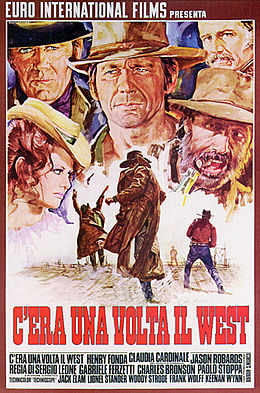
How can you trust a man who wears both a belt and suspenders? That's spoken by Henry Fonda, in Sergio Lione's film Once Upon a Time in the West. When I heard it, it struck me as a manufactured situation--the character he's talking about really does wear both thing to hold up his pants, but I figured no real person did so. Since seeing that movie, I've seen several people who wear both suspenders and a belt.
Don't listen to what your school teachers tell you. Don't pay attention to that. Just see what they look like and that's how you know what life is really going to be like. Woody Allen, in Crimes and Misdemeanors.
Truth may be stranger than fiction, goes the old saw, but it is never so strange as lies (or for that matter, as true). Proof of which maxim is the fact that I just made it up. John Hodgman, The Areas of My Expertise.

It was not so much that he lied as that there was no truth to tell.
Good stuff.
He also wrote, Road to hell paved with unbought stuffed dogs. That's in The Sun also Rises.
Here's stuff not written by Hemingway.
I remember the lies, but the truth escapes me. That's Paul McGarity. Old friend of mine.
![]() |
| Michael Zulli was my favorite Sandman artist. |
Any novel begins in a weird, rooty place and ends up at the tip of a leaf. Neil Gaiman. He said that at a thing called Fiddler's Green, which was a convention for Sandman fans. Yeah, I went to that.
![]() |
| Yeah, it's about werewolves. Sort of. |
For every man manufactures his own private Hell and peoples it with demons of his own creation, to torment him for his own secret sins, imagined or real. Jack Williamson, in Darker than You Think.
![]() |
| I went with the Italian version of the poster. |
How can you trust a man who wears both a belt and suspenders? That's spoken by Henry Fonda, in Sergio Lione's film Once Upon a Time in the West. When I heard it, it struck me as a manufactured situation--the character he's talking about really does wear both thing to hold up his pants, but I figured no real person did so. Since seeing that movie, I've seen several people who wear both suspenders and a belt.
![]() |
| Maybe my favorite Woody Allen movie. |
Don't listen to what your school teachers tell you. Don't pay attention to that. Just see what they look like and that's how you know what life is really going to be like. Woody Allen, in Crimes and Misdemeanors.
| There were times when Twain had dark hair | . |
Unconsciously we all have a standard by which we measure
other men, and if we examine closely we find that this standard is a very
simple one and it this: we admire them,
we envy them, for great qualities which we ourselves lack. Hero worship consists in just that. Our heroes are men who do things which we
recognize with regret and sometimes with a secret shame that we cannot do. We find not much in ourselves to admire, we
are always privately wanting to be like somebody else. If everybody was satisfied with himself there
would be no heroes. Mark Twain, Autobiography
Let's end with this one:
Truth may be stranger than fiction, goes the old saw, but it is never so strange as lies (or for that matter, as true). Proof of which maxim is the fact that I just made it up. John Hodgman, The Areas of My Expertise. Tuesday, May 29, 2012
Jimmy Olsen
I didn't get much of a chance to write about the supporting cast of characters in my book manuscript, so I figure this is the place to do it. First up, Superman's pal.
![]() |
| I like monsters. |
![]() |
| Jack Larson as Jimmy from the Adventures of Superman television show. |
I do love the old Jimmy Olsen comics. That guy was insane. One time, he found an ancient bottle of soda pop, drank it--to prove it wasn't magical like everyone said--and turned into a werewolf.
![]() |
| A stylish werewolf. |
Can somebody explain that one to me? Why is it 52? Is it just that there are that many weeks in a year?
![]() |
| Frank Quitely, you never let me down. |
Anyway, I'm no expert on Jimmy Olsen. He has demonstrated a distinct lack of presence in the Superman comics for the last few years. And I have desire to address the fiasco that was Jimmy on the show Smallville. So my experience with the character has been limited to a few collections of old stuff I've read, which have been great. The problem is, it seems like the Jimmy Olsen of the many transformations is gone forever; killed in Whatever Happened to the Man of Tomorrow? Jimmy Olsen is a victim of the serious-ization of comics. There's probably a better way to phrase that.
So, maybe this isn't the most satisfying examination of Superman's supporting characters, but then again, Jimmy Olsen isn't the best of them anymore. I'll have more to say about the various L.L. of Superman's life, in the coming weeks.
Friday, May 25, 2012
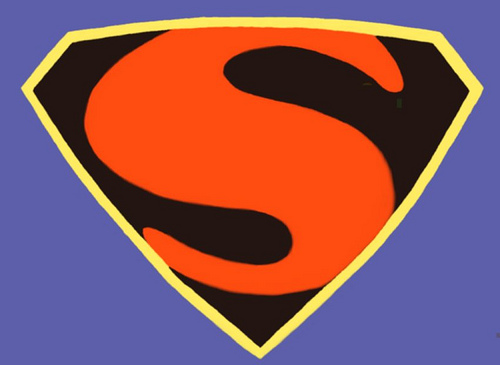
The Symbol
People like to write about the way Superman changes over time. Maybe one day I'll have something more to say about that, but for now, let's just look at the way some people present the changes to the Superman shield.
There's this one from Metropolisplus.
This incorporates some of the live-action shields. Why only go to Curt Swan?
![]() |
This one gives more attention to the early, triangle versions.
And, for the record, this one's my favorite version. The shield from the old Fleischer Studios animated short films. I don't know why it's my favorite. It just is.
Thursday, May 24, 2012
An appreciation of Stefano Caselli
Caselli is an Italian artist who has started drawing some issues of Amazing Spider-Man for Marvel. I first came across his work on Avengers: The Initiative. Followed him to Secret Warriors. I'm not exactly sure what it is about his work that appeals to me. There's a plasticity to the way he draws people, most notable in this ASM cover and Mr. Fantastic's face.
I think his work is best suited to horror, and that's probably why he sort of made his name working on Hack/Slash. He also did the series Defex, and did some G.I.Joe work, too. Probably other stuff I haven't been able to track down.
Like I said, his work would fit well with horror, and with that often comes fantastical monsters.
Or Volstagg the Vehement. Wait, you don't know Volstagg? He'd buddies with Fandral the Dashing and Hogun the Grim. No, I'm not kidding.
![]() |
| Vainglorious? Variegated? I can't come up with any good v-words. |
His covers for Spider-man are pretty great.
Caselli's work can be cartoonish in that his characters' poses and expressions are exaggerated, but this fits the superhero genre he's been working in lately. And I think it works. His faces are expressive, and that's a very good thing. He's one of the few pencillers whose work I actively seek out.
![]() |
| Tank Girl |
Wednesday, May 23, 2012
Darth Vader vs. the Wolf Man
![]() |
| My favorite movie ever. |
Who’s
stronger, Superman or the Hulk? Comic fans once thrived on such questions, and to some extent, they
remain popular. I’m asking one that’s
never been asked before…Who’s worse, Darth Vader, or the Wolf Man?
First, let's be clear. I’m talking about The Wolf Man, not
Werewolf by Night or Man-Wolf or the Werewolf of London or Teen Wolf or anybody else. I’m talking about Lon Chaney, Jr., playing
Lawrence Talbot in George Waggner’s 1941 movie (and, to a lesser extent,
Benecio del Toro in Joe Dante’s 2010 movie The Wolfman), who despite being pure of
heart and saying his prayers by night turns into a pig-nosed hairy fella when the
full moon shines bright. Second, I’m talking
about Darth Vader. Third, I’m not
talking about a physical fight here.
That
one would be interesting, sure. What
would happen to a monster who can only be killed by silver if Vader slashed his
arm off with his light saber? And would
the Wolf Man’s speed and claws be enough to get by Vader’s reflexes and
precognition? Vader could stop laser blasts
with his hands, after all. I never get tired of that scene in Empire where Han shoots at him in that
Cloud City dining room.
I’m more
interested in how they lived and died. They were
both good people in many ways, separated from their families until reunited by tragedy
and pain. They both undergo a dark
transformation and kill lots of people.
Then they’re defeated in battle by a family member: Larry by his father;
Darth by his son. Their stories are about father-son relationships. (The 2010 Wolfman film has the son kill the father.)
![]() |
| Evidently we're uncomfortable with Oedipus reversed. |
In
The Wolf Man, the father-son tension
is all subtext. Larry comes home to Wales
after the death of his brother, presumably to assume the brother’s role in the
family. He and his father Sir John don’t
argue much: it’s more like they don’t know how to relate to each other. Then, Larry wolfs out, kills some people, feels
bad about it but can’t stop it, and Sir John beats him to death with a silver
cane. The last shot of the film shows
Sir John’s reaction to the revelation that Larry was really a werewolf, a
murderer, whom he’s just beaten his son to death. Claude Raines really nails that mixture of grief,
confusion, disbelief, and horror.
![]() |
| Best picture ever? I think so. |
Now
here’s the conflict. Two murderers. One is redeemed in death, one condemned to
life. One makes the choice to kill; the other is driven
by urges he can’t control? It’s not so
much about fan arguments as it is about a view of human nature. Is Vader a good guy, as the three prequels
seemed to be trying to convince us?
Should Larry try to kill himself?
These
characters represent opposing ideas about redemption. The Wolf
Man tells us that no matter how good a person you try to be, if you do bad
things--even if you don’t mean to do them--you’re damned. Star
Wars tells us that no matter how many kids you murder or no matter how many
planets you blow up, if you save your son’s life, you’re salvation is assured. One
of these is characteristically Christian in flavor. As long as you repent, you can get into
heaven. The other is bleak. There is no redemption.
![]() |
| Why do these movies have such similar color schemes? |
DavidBrin, science fiction writer and scientist, has infamously written that the morality
at the core of Star Wars, which he
sees as hinging on that moment of Vader’s redemption, should not provide a model for us to use in living our lives. He compares Vader’s redemption to the idea
that Hitler could be acquitted of any crimes against humanity if only his
lawyer made the argument, “But your honor, he saved his son!” The real question
is what happens to Vader after his death.
The film asks us to see him as redeemed because in his Jedi afterlife he
ends up with Yoda and Obi-Wan. Star Wars, and The Wolf Man for that matter, is more complex than that. Brin is really taking issue with a single
image: the redeemed Anakin at the
end.
In the three Star Wars prequels, George Lucas explained why Vader made the choices that he made. Good and evil are certainly more complicated than actions; we look to context and motivations for final judgment. This is why the United States has different penalties for murder if it’s premeditated, a crime of passion, the result of mental insanity, etc. So Lucas asks us to sympathize with Vader because of what happens to him when he is still called Anakin. And what happens? Torn from his mother to study with the Jedi, he learns to suppress his emotions and maintain complete control to avoid becoming evil. He later has dreams that his mother is going to die. Despite knowing that Jedi can have prophetic visions, the Council nonetheless both forbid him from helping her and fail to send anyone else to help.
![]() |
| Too awesome not to include. By obviouswinner. |
In the three Star Wars prequels, George Lucas explained why Vader made the choices that he made. Good and evil are certainly more complicated than actions; we look to context and motivations for final judgment. This is why the United States has different penalties for murder if it’s premeditated, a crime of passion, the result of mental insanity, etc. So Lucas asks us to sympathize with Vader because of what happens to him when he is still called Anakin. And what happens? Torn from his mother to study with the Jedi, he learns to suppress his emotions and maintain complete control to avoid becoming evil. He later has dreams that his mother is going to die. Despite knowing that Jedi can have prophetic visions, the Council nonetheless both forbid him from helping her and fail to send anyone else to help.
Anakin
breaks their rules but arrives too late to save her. Later, he falls in love and gets married. After his wife becomes pregnant, he dreams
that she will die. In searching for a
way to ensure that his wife will live, he is told by Palpatine, who is both his
friend and powerful political leader, that a way can be found using the same
spiritual philosophy that the Jedi condemn as evil. He learns that Palpatine is evil and turns
him over to the Jedi. However, decides to save Palpatine so that he can help his
wife survive. To save him, Anakin kills one of the Jedi. Seeing no alternative,
he swears allegiance to Palpatine, at which point he is now called Darth Vader. His first act as Vader is to murder the
residents of his temple, which include children. For the next twenty years or
so, he remains a servant of Palpatine—now the Emperor—and takes part in the
murder of countless others. Some parts of Star
Wars are really hard to summarize.
Like Vader the Wolf Man kills people. His motivations, however, are strikingly different. He
derives no pleasure from murder; quite the opposite. Whatever feral joy he gets
out of slaughter during a full moon is abated by the subsequent twenty-five
days of failed atonement. He didn’t become a werewolf by choice. His one big transgression is attempting to seduce a woman who’s engaged to another man.
Both the Wolf Man and Darth Vader are monsters. Despite Lucas’ attempts otherwise, Vader still isn’t sympathetic. (My only evidence is anecdotal, but I think the audience still views Vader as a villain.) If he feels bad about things, he doesn’t show it much. The Wolf Man, on the other hand, hates himself for what’s happened. He’s conflicted, and that makes him sympathetic. He may be a monster, but he’s not a villain.
Yet
he is condemned to misery while Vader gets to enjoy Jedi Heaven. This can only
be the result of the fact that Vader does get to commit one act of valor when
he saves his son from death. The Wolf Man, on the other hand, has no moment of
valor.
![]() |
| No redemption, but a very porcine nose. |
One
great thing about popular culture is that it’s everywhere,
and there is a great pressure to keep producing it. In the process, all sorts
of ideas get bandied about. And people have the opportunity to examine them, to
take them to heart, to explore their meanings. These ideas are often
contradictory, but this is a good thing. They present alternative answers to
troubling questions, often in playful form so we don’t have to take them too
seriously. Regardless, the ideas are there, for us to explore if we want.
Redemption
seems to be a very important issue for American. The problem is, it seems we’re not quite sure how
to go about achieving it. That’s where stories such as these come in. We can,
if we so choose, see in them different ideas about how it’s done. Vader and Wolf Man are
at opposite ends of the spectrum. Our cinema is obsessed with characters who do
something wrong and expend a lot of effort trying to make up for it. Very
rarely do we deny them forgiveness, but how much are we willing to forgive?
Killing people pushes us to think about that question. How far is too far? Are
there unforgivable and irredeemable crimes? Does motive matter? Regardless of
law in the matter, people must deal with each other. Convicted criminals can
gain parole. They can evade capture. They can define away their crimes or
rationalize them. The law can only get us so far. It doesn’t tell us how we
should relate to our loved ones. Luckily, we have movies for that.
Tuesday, May 22, 2012
Luthor-Quintum Update
So I write about All-Star Superman a lot. I like it. It makes people think interesting thoughts. One guy told me that people who don't like All-Star Superman don't have souls. Another guy (actually, several people) seem to think that the character Leo Quintum--invented for the series by author Grant Morrison--is actually Lex Luthor, come back from the future to atone for his crimes by making the world a better place through Science. I wrote about this theory a while back.
![]() |
| What is with this cover? |
Interestingly, it showed up in the book Critical Approaches to Comics: Theories and Methods as part of Peter Coogan's essay "Genre: Reconstructing the Superhero in All Star Superman." There's a bit about structuralism, a bit about genres, and he goes through the various proofs that Leo is Lex. He even cites some of the comment threads in which the idea appeared online, originally by Cole Moore Odell. (Coogan wrote Superhero: The Secret Origin of a Genre, a book which I have seen cited a whole lot. It's got an Oedipal analysis of Superman and Luthor, and I have a thing or two to say about that interpretation of the character in my own book--which I hope everyone in the world will get to read some day.)
| Denny O'Neil must make a full time job of writing intros now. |
People are fascinated by the fact that Morrison himself does not say an unequivocal 'yes' or 'no'. The whole thing is summed up here. Lurking behind all of this is the notion that Morrison gets the final word on the matter. But does he? People can interpret the stories in whatever manner suits them, even bending the narrative to fit their interpretations, often without realizing they are doing so. Artists tell a story, and people do what they will once they read it.
![]() |
| I'm kind of obsessed with the art of Frank Quitely. |
More about redemption, though not about Superman, next time.
*It's interesting to note that, while the comic book version of All-Star offers in an off-hand manner the fact that "Even Luthor seemed to find some closure in the face of renewed global calls for his execution", the animated movie of it has Luthor play a more prominent role at the end. The fact that he gives Quintum the formula for Superman that leads to Project and the Superman dynasty suggests a more fully realized redemption, in spiritual if not in legal terms.
Monday, May 21, 2012
The story behind the story
From the June 21, 1941, issue of The Saturday Evening Post, we learn that Jerry Siegel once answered his door every to find a group of boys inquiring about Superman. Siegel told them that Superman did live there, but that he was out stopping criminals at that moment. To bolster his claim, he would show the kids one of Superman's spare outfits. He and Joe Shuster "have assumed a solemn obligation to instill faith, whenever possible, in the physical reality of Superman."
Interesting stuff. The article has what has to be one of the earliest printed versions of Siegel's tale of when he came up with the character, on a sleepless and hot summer night:
I am lying in bed counting sheep when all of a sudden it hits me. I conceive a character like Samson, Hercules and all the strong men I ever heard tell of rolled into one. Only more so. I hop right out of bed and write this down, and then go back and think some more for about two hours and get up again and write that down. This goes on all night at two hour intervals, until in the morning I have a complete script.
He then runs to Joe Shuster's house and they work on the character together. In this version, it happened in 1932. I've usually seen the date as 1933. The Steranko History of Comics covers this, too.
![]() |
| Good stuff. |
There are lots of other versions of this story told these days.There's an illustrated book called Boys of Steel by Mark Tyler Nobleman.
![]() |
| This seems to be the promotional image for The History of Invulnerability. |
![]() |
| A thriller that involves secrets about Superman's creator and Cain. Yes, that Cain. |
There's a whole bunch of stuff about it in Brad Meltzer's novel The Book of Lies.
![]() |
| Where are all those people going? |
Gerard Jones discusses it a bit in Men of Tomorrow. Also, i want to say that it inspired a lot of Michael Chabon's Kavalier and Klay novel.
There's some contention about what drove Jerry Siegel to create Superman, largely because he only talked about that one night in the early 30's and shied away from any self-psychologizing. There are a whole bunch of other discussions of it that I'm omitting here. It's becoming a bigger and bigger part of the Superman story, especially as the publicity of the lawsuit over the rights to the character becomes more and more prominent. It seems likely that, if Warner Brothers could tell the story without making themselves look immoral, they'd probably make a feature film out of it.
On a related note: Google image search turns up some weird stuff, doesn't it?
Labels:
biography,
boys of steel,
copyright,
history,
jerry siegel,
Joe Shuster,
legalities,
michael chabon,
origin,
Shuster
Friday, May 18, 2012
So we chose not to deconstruct the superhero but to take him at face value, as a fiction that was trying to tell us something wonderful about ourselves. Somewhere, in our darkest night, we made up the story of a man who will never let us down and that seemed worth investigating.
--Grant Morrison, talking about All Star Superman in Wired.
That interview was from a few years ago now, but it's an interesting thought. He wants to investigate what it means to 'never let us down.' It's not always intuitive. It's not always obvious. What's the right way to help people? What's the right way to be a hero? What does it mean to be good? In interviews I've read and conducted, people say time and time again that we always know what Superman would do in any situation.
There's a pretty good recent book called Do the Gods Wear Capes? by Ben Saunders. There's a chapter on Superman, and it's pretty much about this question. In his view, Superman is basically a way for writers, from Jerry Siegel onward, to explore this very notion of 'the good.' And it's got a nice Mike Allred cover.
I guess this is why the Supermen (Supermans?) of so many recent incarnations are so troubling to me (I'm looking at you, Earth One--sort of you, too, Smallville, though I haven't read the new comic version of that). If Superman represents what we think of as someone who is the definition of good, why do those guys stand around so much, waiting for there to be no choice but to act?
Thursday, May 17, 2012
Own Worst Enemy is done
Own Worst Enemy, the movie I wrote with Mike Judd--and which he directed with his wife Jessica Judd--is now finished. I watched it just yesterday, and it turned out pretty great. You can watch the trailer here. Or here, if youtube's your thing. And this is the website. It stars john Mattey, Jennifer Kelsey, Mike Lutz, Karl Ramsey, Mona Gillen, and Laura Drake Mancini. As soon as I'm done moving into my new place, I'm going to have a screening in Bloomington, probably at The Bishop.
Other Stuff...
So I've gotten to a point where I have nothing more to do on "Superman in Myth and Folklore" (until somebody wants to publish it, that is; then I'll begin finding and fixing things that are wrong with the manuscript), and I've finished writing a short novel recently. What next, I wonder. I've been going more than a bit crazy trying to figure this out, and I think it's one of the reasons I've returned to this blog--you know, something to type while I wonder and brew.
I had thought of putting together a book of articles on Disney, but I decided against it (have you read the academic work on Disney? It's angry. All of it).
Now I'm thinking that I might write a book about Santa Claus. I may enlist the aid of some other writers, too. It's a big topic. I'll probably narrow it down a bit. I wrote my Master's thesis on holidays, particularly on Halloween, Thanksgiving, and Christmas. It would be fun to return to that material.
Wednesday, May 16, 2012
What Else?
As this blog resurges, I'm going to be writing about more than Superman stuff. Sure, there will be a lot of stuff about the character--I have an entire notebook filled with things that didn't go into the draft I sent to the publisher--but I can't write about Superman every day. So, what else is going on?
Here are some things I'm reading these days.
Comics:
Superman and Action. I'm about done with these, to tell you the truth. Seventeen issues into the relaunch of the New 52, and I've only liked one of them (that was Action Comics No. 9--and I only liked that one a little bit, and it had nothing to do with the other 8 issues of Action). Everything else has been a waste. Action has mostly terrible art. Superman has terrible writing and forgettable art.
![]() |
| A controversial cover because of the winged woman feeding an infant. |
Saga. Two issues in and it's good so far. Brian K. Vaughan and Fiona Staples.
![]() |
| The new series. |
Courtney Crumrin. I've read everything so far, and there's now an new ongoing that started out pretty great. There's a new hardcover edition of the original mini-series, Courtney Crumrin and the Night Things, that I'm dying to get. Unfortunately my budget has no room for buying things I already have, no matter how good the coloring looks or how beautiful the cover looks. Written and drawn by Ted Naifeh.
![]() |
| The best issue of the series so far. |
Yeah, that's it for ongoing stuff. I found a copy of Clockwork Girl at the library, and I enjoyed that quite a bit.
Books:
![]() |
| Fossil of a feathered dinosaur called microraptor. Awesome. |
I plan to read Darwin's Black Box and Of Pandas and People next, to balance the evolutionary perspective with the creationist viewpoint. Wish me luck.
Finally, I'm reading the Arabian Nights. All 1001 of them (+ 2 if you count Aladdin and Ali Baba). I'm 67 nights in, and will do one a day or so until I'm done. That will take me until 2015 at least.
Subscribe to:
Posts (Atom)